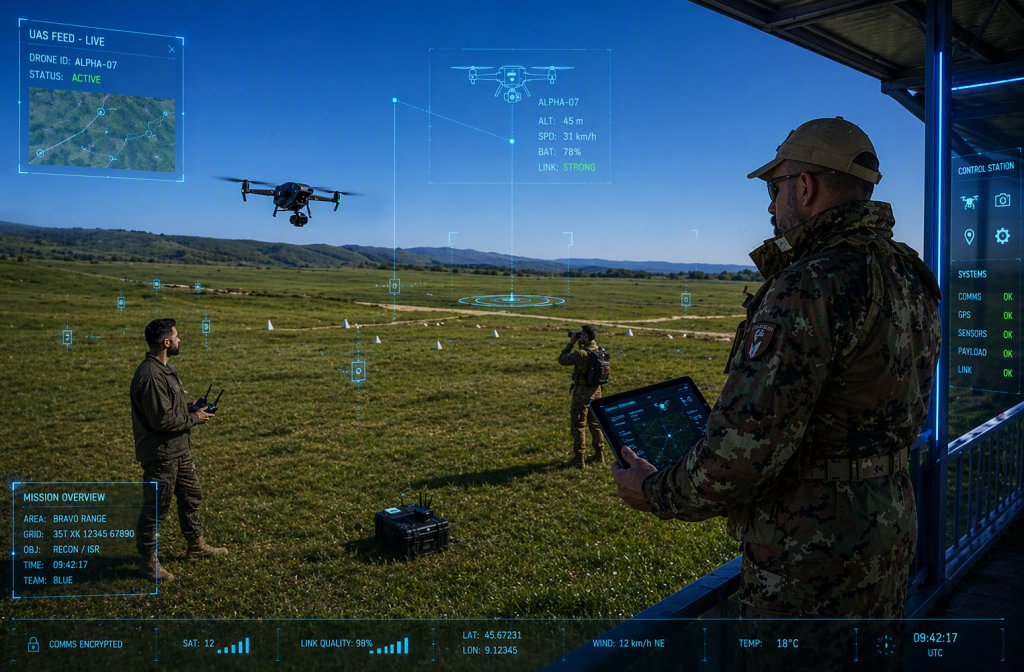
The proliferation of small drones has created new challenges for defense and aerial surveillance, as these systems—classified as LSS (Low, Small, Slow) targets—can be difficult to detect using conventional radars. To address this threat, specialized radars have been developed that are capable of detecting, identifying, and tracking micro-drones from several kilometers away.
In this context, the Ministry of Defense has incorporated a radar system from the Spanish company Adevex, part of the Aicox group, which has demonstrated high effectiveness in locating small drones. The system, acquired through INTA for use at CETEDEX, will be used to conduct tests, trials, and development work related to countering unmanned aerial systems.
In addition to its defense applications, this technology will contribute to the regulation and management of unmanned air traffic, facilitating the identification of drones and their differentiation from other elements in the airspace. Adevex emphasizes that this solution, developed entirely in Spain, strengthens national technological capabilities and allows for an adaptive response to constantly evolving threats.
Technical Specifications of the Radar
The Midrange 3D radar is an advanced solution designed for the detection, identification, and tracking of drones and other small aerial threats, particularly in sensitive environments and critical infrastructure. Based on continuous-wave (CWFM) and monopulse technology, it enables the monitoring of potential incursions before, during, and after they occur.
The system stands out for offering a high probability of detecting complex targets, such as low-profile UAS, while maintaining a low false alarm rate. Its three-dimensional surveillance capability reaches a radius of up to 10 kilometers, providing an accurate view of the surrounding airspace.